Tired All the Time: When Is It Your Thyroid, and When Is It Something Else?
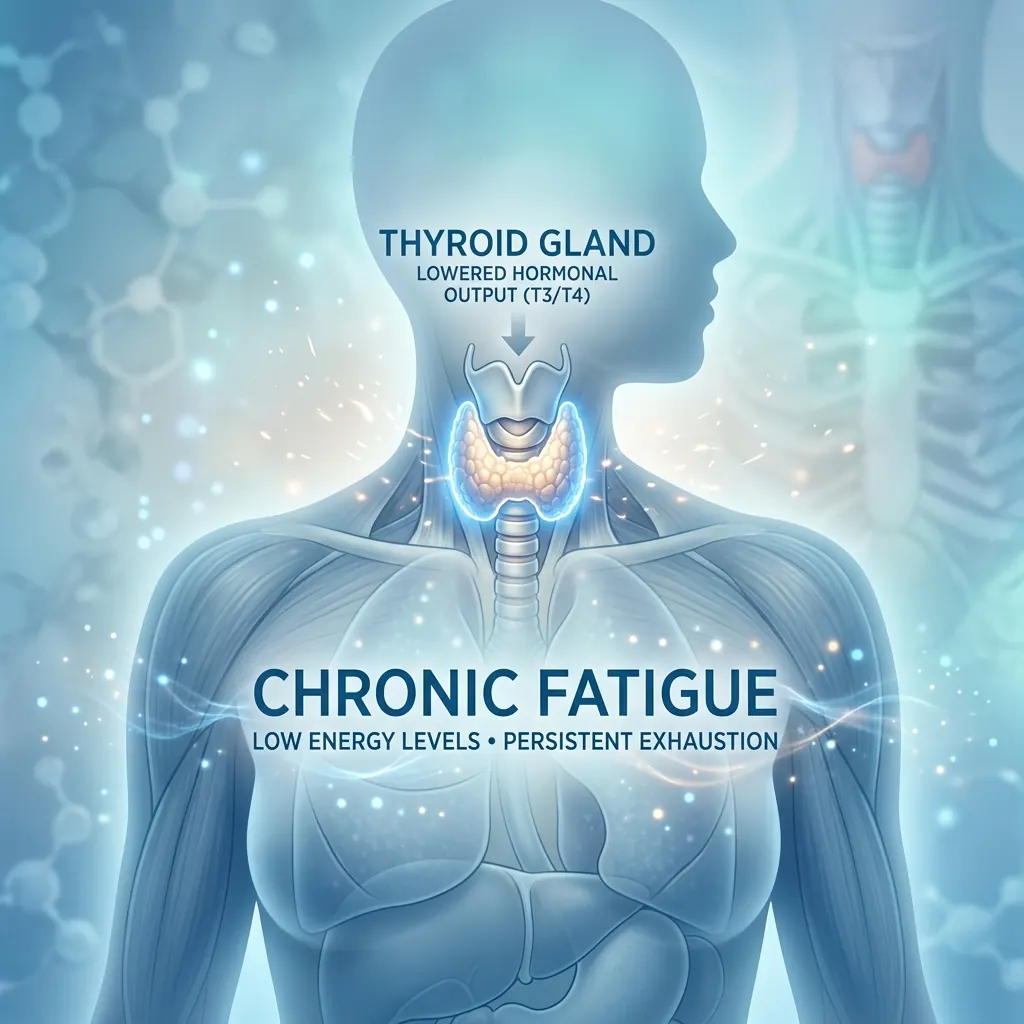
"I'm exhausted, I've gained weight, and I can't concentrate. Is it my thyroid?"
Sometimes. Hypothyroidism produces exactly that triad, and it is underdiagnosed often enough that the question is a reasonable one. But those three symptoms are also the final common pathway of poor sleep, iron deficiency, depression, perimenopause, sleep apnoea, and the ordinary exhaustion of a demanding period in someone's life.
The useful question is not whether your symptoms could be thyroid. It is which pattern you actually have.
The symptoms that point more specifically at the thyroid
Fatigue and weight gain are the headline symptoms, and they are the least specific. The ones that carry more diagnostic weight are quieter:
Cold intolerance that others don't share. Not preferring warmth — being genuinely cold in a room where everyone else is comfortable, particularly hands and feet.
Skin and hair changes. Dry, coarse skin. Hair that has become brittle, or noticeable shedding. Thinning of the outer third of the eyebrows is a classic sign, uncommon but quite specific when present.
Constipation that is new for you. Thyroid hormone sets gut motility along with everything else.
A resting heart rate that has dropped, sometimes into the 50s, without a corresponding increase in fitness.
Heavier or more frequent periods, or cycles that have become irregular.
A slowed quality to things — speech, movement, reflexes, thought. Patients rarely report this themselves; partners often do.
Hoarseness or a feeling of fullness in the throat, sometimes with visible or palpable thyroid enlargement.
Fatigue plus weight gain alone is a weak signal. Fatigue plus cold intolerance plus dry skin plus constipation is a much stronger one.
What makes hypothyroidism more likely in the first place
Some people start with a higher prior probability:
- Being female. Hypothyroidism is several times more common in women.
- A family history of thyroid or autoimmune disease — including type 1 diabetes, coeliac disease, rheumatoid arthritis and vitiligo, which cluster with autoimmune thyroid disease.
- The first year after giving birth, when postpartum thyroiditis is common and frequently mistaken for ordinary new-parent exhaustion.
- Previous thyroid surgery or radioactive iodine treatment.
- Certain medications, notably amiodarone and lithium.
- Age over 60, where presentation is often atypical and easily attributed to ageing.
What actually settles it
The workup is not elaborate. TSH and free T4 answer the question in the great majority of cases.
If TSH is elevated and free T4 is low, that is overt hypothyroidism and it needs treatment. If TSH is elevated and free T4 is still normal, that is subclinical hypothyroidism — and whether it warrants treatment depends on how high the TSH is, whether antibodies are present, your symptoms, your age and whether you are pregnant or trying to conceive. It is a genuine clinical judgement rather than a threshold.
Thyroid antibodies (anti-TPO) tell us whether the cause is autoimmune, which is useful for predicting whether a borderline picture will progress.
That is usually the whole thing. It is a blood test, and it is neither expensive nor difficult to obtain in Lima. If you want to make sense of a result you already have, the TSH interpreter covers the main scenarios, and this guide to Peruvian lab reports explains why the printed reference range varies between laboratories.
What to rule out at the same time
Because the symptoms overlap so heavily, I usually check these alongside the thyroid rather than sequentially. Checking one thing at a time turns a two-week answer into a six-month one.
- Iron studies, including ferritin. Iron deficiency without anaemia causes profound fatigue and is frequently missed, particularly in menstruating women.
- Vitamin B12.
- Vitamin D, which is very commonly low in Lima for reasons that have to do with the city's climate.
- A full blood count and metabolic panel.
- Sleep. Untreated sleep apnoea produces fatigue, weight gain and cognitive fog indistinguishable from hypothyroidism, and no thyroid test will reveal it.
When to book an appointment
- Symptoms persisting more than six to eight weeks with no obvious explanation
- An abnormal TSH from a routine check that nobody has interpreted for you
- A palpable lump or visible swelling in your neck
- A family history of thyroid disease alongside suggestive symptoms
- Pregnancy, or planning one, with any thyroid history at all — thyroid targets in pregnancy are tighter and the stakes are higher
- You are already on levothyroxine and still do not feel well
The outcome patients don't expect
A meaningful proportion of people who come in convinced their thyroid is the problem leave with normal thyroid function and a different explanation — usually iron, sleep, or vitamin D. That is not a wasted appointment. It is the difference between treating something and treating the right thing.
And if it is the thyroid, it is among the more satisfying conditions in medicine to treat: the diagnosis is a blood test, the treatment is a single daily tablet, and most people feel substantially better within weeks of reaching the correct dose.
Quick Test: Is your metabolism slowed down?
Answer 4 simple Yes/No questions to discover if your symptoms could be related to a hormonal or thyroid imbalance.
Related articles

Reading Thyroid Blood Tests Done in Peru: What Transfers and What Doesn't
TSH, free T4 and thyroid antibodies from a Lima laboratory, explained for patients used to US, UK or European reports — which numbers transfer directly, which ranges differ, and what actually needs interpreting.

Getting Ozempic or Mounjaro in Peru, Safely
Semaglutide and tirzepatide are available in Peru — and so are counterfeits. How to verify what you are buying, what a legitimate prescription involves, and what supervision should actually look like.